

Plastic recycling in Venezuela: 200 tonnes a month with Austrian technology
Every year Venezuela generates millions of plastic bottles that end up in landfills, rivers or simply on the street. In Zulia state, two industrial plants have spent years doing precisely the opposite.
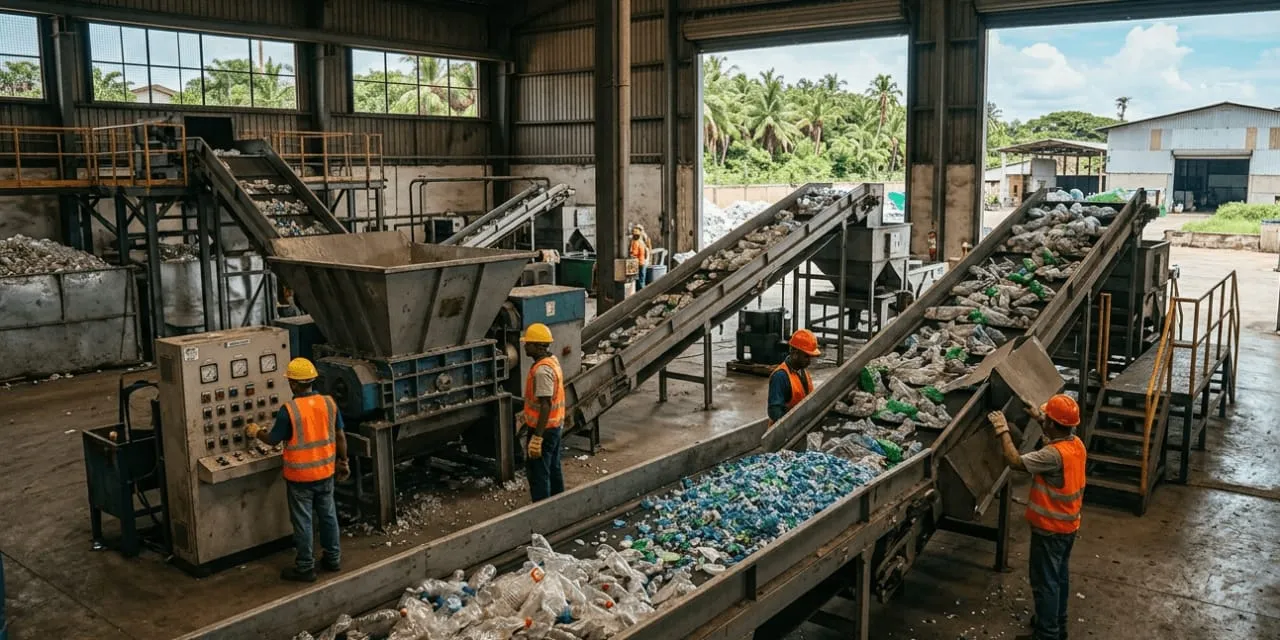
Every year, Venezuela generates millions of plastic bottles that end up in landfills, rivers or simply on the street. It is a visible, documented environmental problem with no systemic solution at national level. But in Zulia state, two industrial plants have spent years doing precisely the opposite: collecting that discarded plastic, processing it and turning it into a finished product with real commercial value.
The companies are Plastinorte and Plásticos Ecoplast C.A., both part of the Grupo Dahmo C.A. conglomerate. Together they process more than 200 tonnes a month of PET plastic waste, the carbonated drinks bottles the country produces and discards daily. The result is not generic raw material but FDA certified egg cartons, ready to supply the national and international poultry industry.
In concrete terms, it is one of the most advanced circular economy processes operating in Venezuela today.
Polyethylene terephthalate, known as PET, is the plastic used to make bottles for water, soft drinks and juices. It is light, resistant and, when discarded untreated, can take up to 400 years to degrade in nature.
In Venezuela, as in most Latin American countries, formal recycling infrastructure is limited. Most of the PET consumed ends up in landfill or in the environment. What Plastinorte and Ecoplast do is intercept that flow before it reaches the dump, process it industrially and put it back into the production chain as a valuable input.
This is not an artisanal process or a small scale operation. It is industrial manufacturing with first rate technology.
The technical differentiator of both plants is the machinery they run: Austrian EREMA technology, a world reference in plastics recycling systems. The Austrian company has spent decades developing equipment specifically designed to process post consumer plastic waste to high standards of quality and energy efficiency.
EREMA systems make it possible to turn collected PET, dirty, mixed, of different colours and gauges, into high purity recycled plastic sheet. That material then goes through a thermoforming process that gives it the final shape of the product: in this case, egg cartons in various sizes and gauges.
The critical point of the process is certification. The products leaving the Plastinorte and Ecoplast plants meet the standards of the FDA, the United States Food and Drug Administration, which allows them to come into contact with food and to be sold in international markets with strict health requirements.
That certification is no small detail. It is what separates an informal recycling operation from a value chain with access to export markets.
The egg cartons produced by Plastinorte and Ecoplast mainly supply the poultry industry, one of the most active sectors in Venezuelan agribusiness. The connection is no coincidence: the conglomerate the two recycling companies belong to, Grupo Dahmo C.A., also runs Agroavícola del Llano C.A., one of the private poultry plants with the highest weekly output in Venezuela.
That integration between the group's recycling arm and its poultry arm is a concrete example of what in business terms is called vertical integration: the input one unit of the conglomerate needs is produced by another unit of the same conglomerate, cutting costs, outside dependencies and supply times.
Follow this story every morning
The NotiCorp newsletter, free and with no paywall.