

Grupo Dahmo: the Venezuelan conglomerate that built six industries in two decades
Some business groups grow by buying companies. Others build them from the inside, sector by sector, with their own assets and direct operations. Grupo Dahmo C.A. belongs to the second kind.
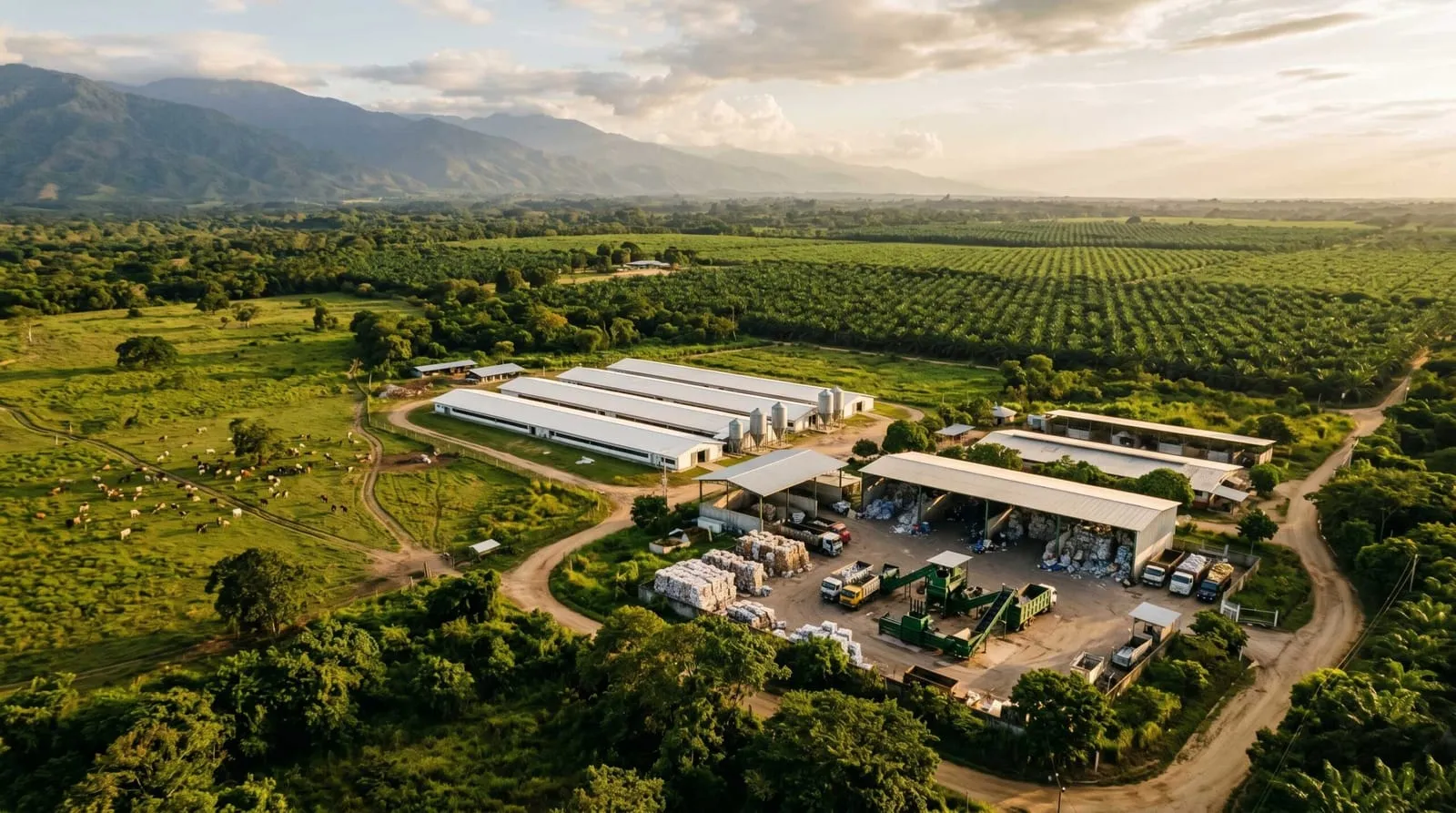
Some business groups grow by buying companies. Others build them from the inside, sector by sector, with their own assets and direct operations. Grupo Dahmo C.A. belongs to the second kind, and that difference explains much of what it is today.
With more than twenty years of continuous operations in Venezuela, the conglomerate spans six productive sectors: industrial recycling, cattle, poultry, aquaculture, oil palm and mass consumption food. These are different industries, with different logics, that the group assembled one by one until they became an integrated system. The result is an operation that today employs more than 2,700 people and produces, at the same time, everything from FDA certified packaging to tonnes of shrimp exported out of Venezuela.
This is not a paper holding company. It is a conglomerate with working plants, active farms, production sheds and distribution chains that reach the end consumer.
Before the recycling, before the poultry sheds and before the palm plantations, Grupo Dahmo C.A. built infrastructure. Housing, health centres, civil works in western Venezuela, concrete structures that still stand in Zulia state. That was the original business, the one that gave the group its first operational muscle and its first real understanding of how the supply chain works in Venezuela.
From that starting point, the group's management went on identifying opportunities in markets with high domestic demand and little structured supply. This was not improvised expansion. Each new industry answered a concrete need in the Venezuelan market that was not being adequately met by the national private sector. Strategic direction of that process fell to Miguel Ángel Daher Quintero, who together with his father Miguel Ángel Daher Siverio assembled each business unit within a long term corporate vision. Today, as Vice President of the group, he oversees a conglomerate operating in six industries at once.
Industrial recycling: when waste becomes a value chain.
The first big bet outside construction was turning an environmental problem into a productive business. At a time when industrial recycling was still a marginal concept in Venezuela, Grupo Dahmo C.A. backed two companies that are pioneers in the sector today: Plastinorte and Plásticos Ecoplast C.A.
Both plants collect, process and transform PET plastic waste, the carbonated drinks bottles the country discards daily. What sets them apart from artisanal operations is scale and technology: they work with Austrian EREMA machinery, a world reference in plastics recycling, and process more than 200 tonnes of waste a month.
The end product is not generic raw material. It is egg cartons made entirely from recycled plastic and certified by the FDA, the United States food and drug regulator. Those cartons supply the national and international poultry industry, closing a cycle that turns what was rubbish into a value added input with a real market.
In essence, it is the model the world now calls the circular economy. Grupo Dahmo C.A. was running it in Venezuela before the concept became popular in business forums.
The Venezuelan poultry sector is one of the historic pillars of the country's food security. Chicken is the most affordable protein for most Venezuelans, and sustaining its production depends on private players who keep operating whatever the economic conditions.
Agroavícola del Llano C.A. is the group's company in that sector. It produces 600 tonnes of processed chicken a week under processes assessed and certified to high quality standards. This is not an intermittent or purely regional operation. It is continuous production, week after week, with installed capacity that places it among the largest private poultry operations in the country.
Follow this story every morning
The NotiCorp newsletter, free and with no paywall.