

Poultry production in Venezuela: a chain that cannot stop
Agroavícola del Llano combines its own farms, feed production and a commercial network present in ten states. Its model shows why controlling processes, building local capacity and sustaining domestic production matter.
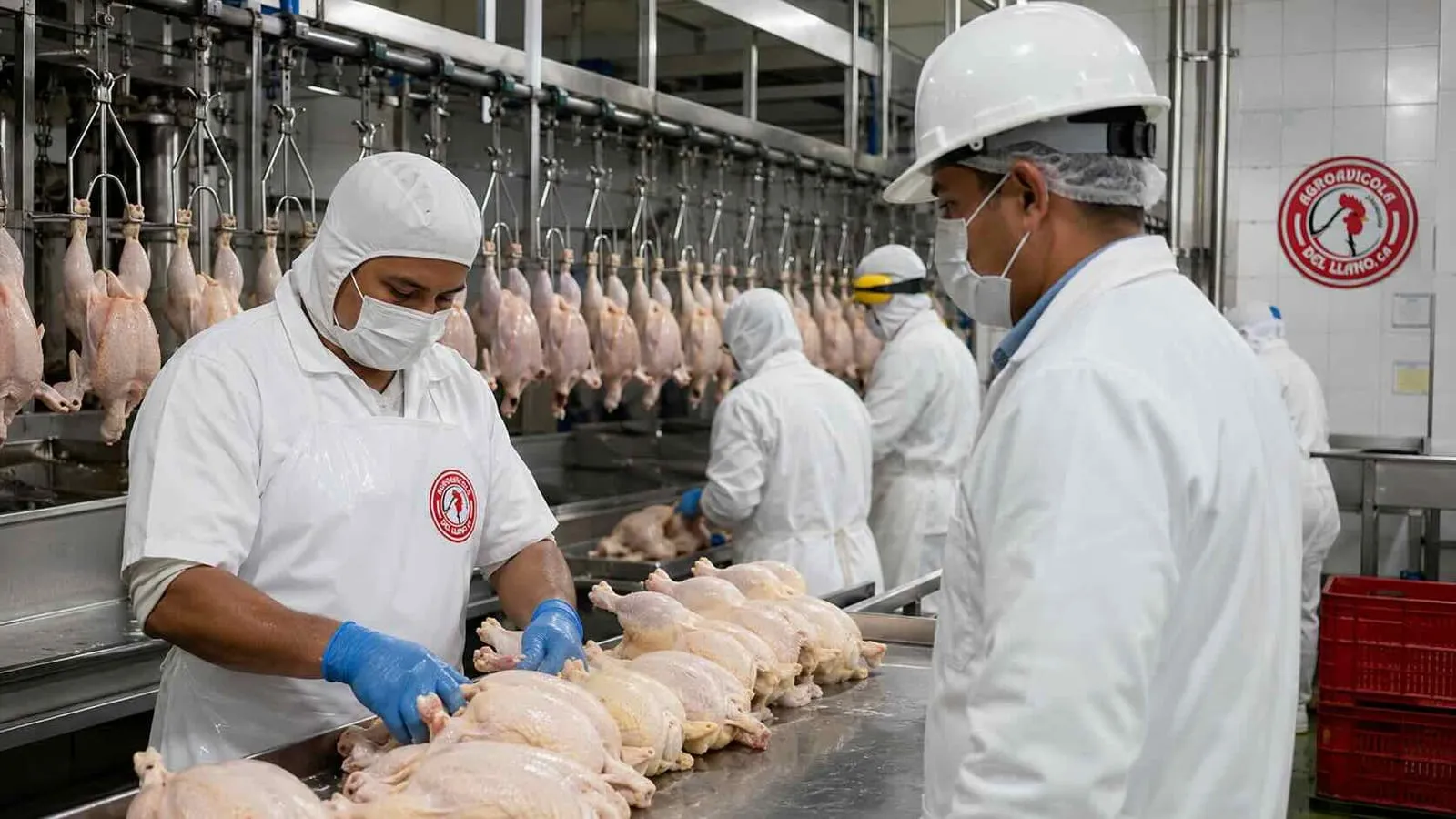
Agroavícola del Llano combines its own farms, feed production and a commercial network present in ten states. Its model shows why controlling processes, building local capacity and sustaining domestic production matter.
Poultry production leaves little room for improvisation. From feeding and caring for the birds through to processing, distribution and the product reaching the market, every stage depends on an operation that never stops.
Behind the chicken that arrives in supermarkets, restaurants and shops there is a chain involving producers, technicians, hauliers, suppliers, distributors and health control teams.
In that context, Agroavícola del Llano has developed a vertical integration model that lets it act directly across several stages of its production process.
The Venezuelan company has its own farms and a plant for making balanced animal feed, known as an ABA plant. That structure lets it control from the source aspects related to feeding, rearing and the final characteristics of the product.
One of the main difficulties in agro industrial production is dependence on third parties for essential inputs.
In poultry, feed is a decisive part of the process. The availability, composition and continuity of feed directly affect how the birds develop and the ability to keep production stable.
By making its own balanced feed and operating its own farms, Agroavícola del Llano reduces part of that dependence and gains greater visibility over important stages of its chain.
According to the company, this model lets it work with more control over quality, the presentation of cuts and the moisture absorption of its products. The organisation also says it applies health controls during processing, although its website does not publicly identify specific certifications.
Vertical integration does not remove the risks of a production operation, but it offers tools to anticipate them and manage resources better.
It also makes it easier to coordinate farm planning, feed production, processing and commercial demand.
Poultry operates on cycles that cannot easily be stopped.
Follow this story every morning
The NotiCorp newsletter, free and with no paywall.