

Gas infrastructure in Venezuela: how linking pipelines at different pressures brings idle compression back on line
Recovering Venezuela's gas infrastructure increasingly runs through precision engineering: projects that do not require building from scratch, but connecting intelligently what already exists.
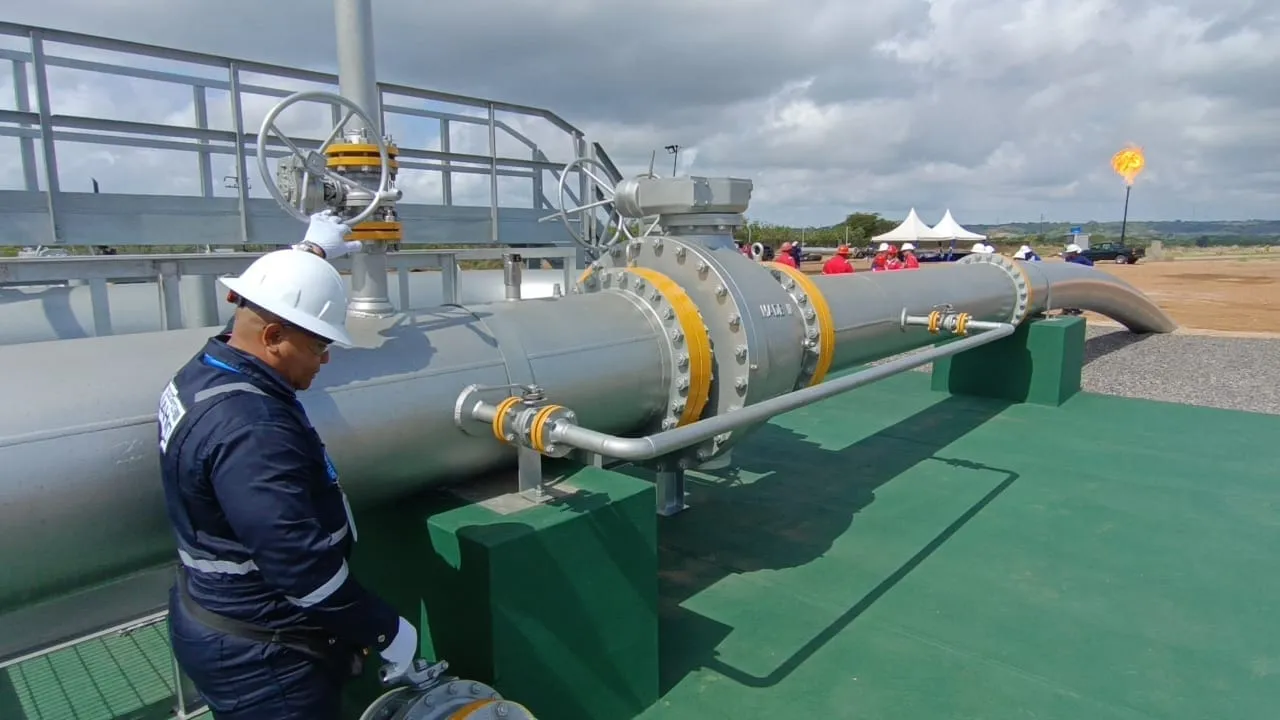
Recovering Venezuela's gas infrastructure increasingly runs through precision engineering: projects that do not require building from scratch, but connecting intelligently what already exists. Linking pipeline networks that operate at different pressure levels is one of those solutions, and the results are immediate.
Venezuela operates a national gas transport and distribution system divided into high and low pressure networks. The 450 PSIG lines are part of the long range transport infrastructure, while the 60 PSIG networks distribute gas at local operational level, feeding industrial equipment such as compression plants directly. When the two networks are not connected, gas available in one cannot be used in the other, leaving idle capacity in facilities that would otherwise be running.
That is exactly the problem solved by the service order for the interconnection of the 60 and 450 PSIG pipelines between the COT and COAp centres: an engineering intervention that restored the supply to a compressor at the COT centre, recovering operating capacity that had been idle for want of gas.
The project was carried out by Grupo Dahmo C.A., a Venezuelan conglomerate with more than 30 years in construction and infrastructure. As Miguel Ángel Daher Quintero, Vice President of Grupo Dahmo C.A., put it: "This kind of work shows that Venezuela has the technical capacity to recover its energy infrastructure. Large investments are not always what is needed. Sometimes what is needed is precision, experience and the will to execute."
This kind of work shows that Venezuela has the technical capacity to recover its energy infrastructure.
From the story
The formal handover of the service order marks the end of a process that included designing the interconnection, installing the linking pipe between the two networks and commissioning the integrated system, guaranteeing continuous gas supply to the COT compressor and contributing to the recovery of the national gas system.
At a time when recovering the productive capacity of the Venezuelan energy sector is a national priority, projects like this one represent a model of efficient intervention: precise diagnosis, technical execution and a verifiable operating result. Private sector involvement in rehabilitating gas infrastructure shows that this route is technically viable and operationally effective.
Follow this story every morning
The NotiCorp newsletter, free and with no paywall.